4/7/2026
Diamond Color Grading Explained: The D-to-Z Scale and the LGD Sweet Spot
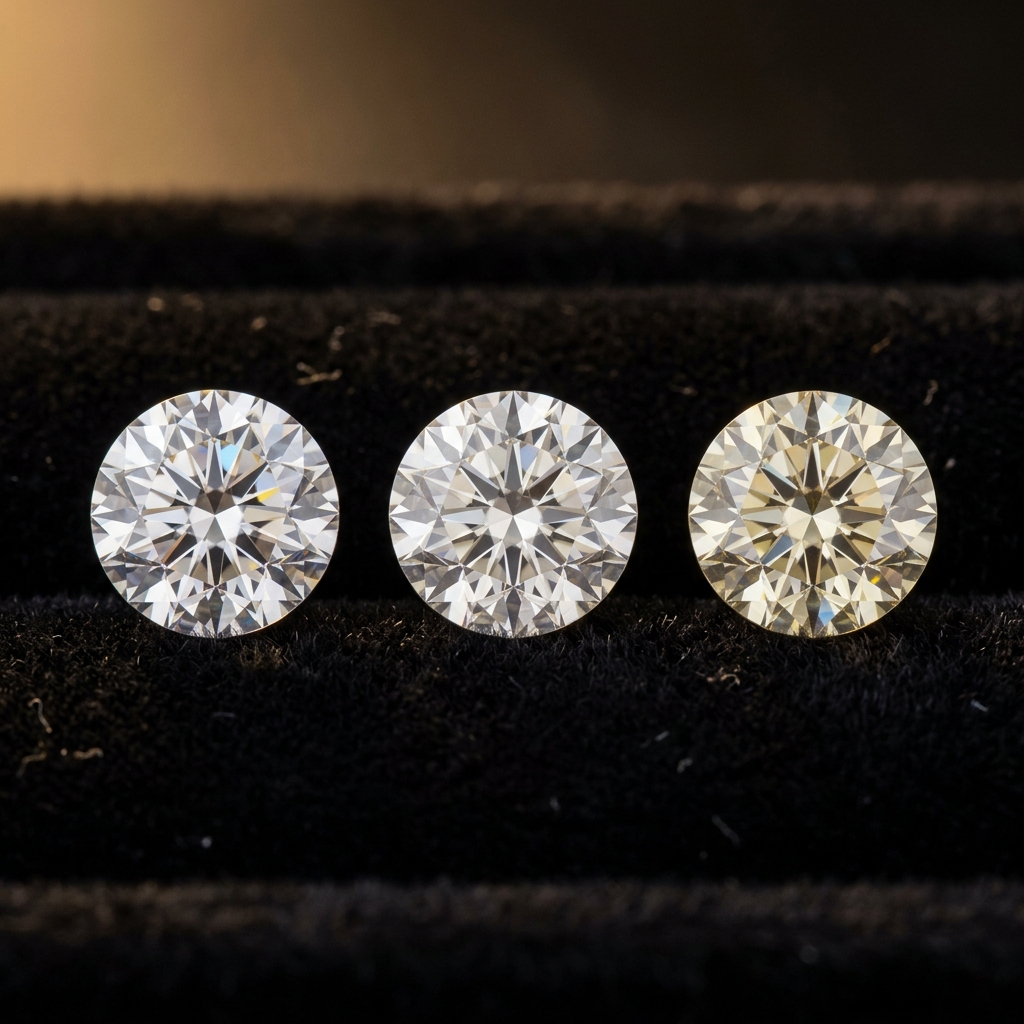
A D-color diamond used to be a status symbol. For lab-grown stones in 2026, it’s just a markup.
When we discuss the 4Cs—as outlined in our Complete Guide to the 4Cs—Color is often the most misunderstood attribute. Buyers instinctively assume that the best letter means the best-looking ring. What jewelers won’t tell you is that human eyes are remarkably bad at detecting color tinting in isolation. Unless you actively understand the D-to-Z scale and the quirks of lab lab-grown diamond production, you will drastically overpay.
The D-to-Z Scale, in Plain English
Diamond color is graded universally on an alphabetical scale starting with D:
- Colorless (D, E, F): Icy white. Absolutely no tint visible to the naked eye, and practically none visible under magnification.
- Near-Colorless (G, H, I, J): Face up, these appear indistinguishable from Colorless stones to the untrained eye. Slight warm/yellow tints only emerge when viewed upside down under professional grading lights.
- Faint (K, L, M): Noticeable warmth or yellow tinting, particularly in diamonds larger than 1.5 carats.
- Very Light / Light (N-Z): Distinctly yellow or brown (unless formally graded as a “Fancy” colored diamond). Avoid.
The Production Reality of LGDs
In mined diamonds, finding a D-color rough is akin to winning the geological lottery, driving prices exponentially higher. Lab-grown diamonds (LGDs) flip the script.
High-pressure high-temperature (HPHT) growing methods, by their chemical nature, preferentially churn out highly sterile D, E, and F color diamonds with ease. Chemical Vapor Deposition (CVD) diamonds can be finely tuned during the growth process or post-growth treated to hit near-colorless and colorless benchmarks reliably.
Because the supply of high-color LGDs is so robust in 2026, the D-to-Z grading system is significantly less “punishing” on price than it is in earthly counterparts. However, jewelers still attempt to anchor LGD prices to the archaic prestige of the ‘D’ grade.
Not sure which grade to buy?
Take our 60-second quiz and we’ll tell you exactly what to look for.
The LGD Sweet Spot: G or H
Unless you are buying a diamond solely to inspect its certificate in a filing cabinet, paying the premium for a D-color LGD is often leaving money on the table.
The smart buyer’s sweet spot is G or H.
When placed face-up in a ring, an expertly cut ‘G’ or ‘H’ color diamond reflects so much blinding white light back to the viewer that any theoretical microscopic “tint” is utterly masked. You get the icy appearance of a D-color diamond but pocket the difference in cash to put toward a larger Carat or an impeccably crafted setting.
The Setting Defines the Diamond
The metal color of your ring setting is the ultimate caveat to color grading.
A diamond is highly reflective, meaning it absorbs and bounces the color of the metal prongs surrounding it.
- White Gold / Platinum: These cool-toned metals reflect absolute white into the stone. If you are setting your diamond in platinum, a G or H color is perfect, but dropping to an I or J might begin to show subtle contrast against the stark white metal.
- Yellow Gold / Rose Gold: These metals cast a heavy, warm glow entirely through the diamond. The trap to avoid: Do not put a D-color diamond in yellow gold. The metal will instantly warm the diamond, visually downgrading it to an ‘H’ or ‘I’. If you want a yellow gold band, save your money and comfortably buy an H, I, or even J colored diamond.
The Fluorescence Question
Jewelers often try to complicate the process by bringing up “Fluorescence” (a diamond’s tendency to glow blue under UV light, which can make lower-color mined diamonds look whiter but can occasionally cause a milky appearance).
Because of the controlled environment in which lab-grown diamonds are synthesized, fluorescence is functionally non-existent in LGDs. If a jeweler uses the absence of fluorescence to try and up-charge you on an LGD, calmly walk away.
Optimize for the visual reality of the stone, match it sensibly to your setting metal, and keep the leftover markup in your wallet.
Color is only meaningful in the context of the other 3Cs — your cut grade and metal choice can mask or reveal a color tier. For the full framework, head back to the 4Cs Complete Guide.
Browse Eternity LGD’s perfectly calibrated near-colorless stock →