4/7/2026
Diamond Cut Quality Explained: Why Cut Matters Most for Lab-Grown Diamonds
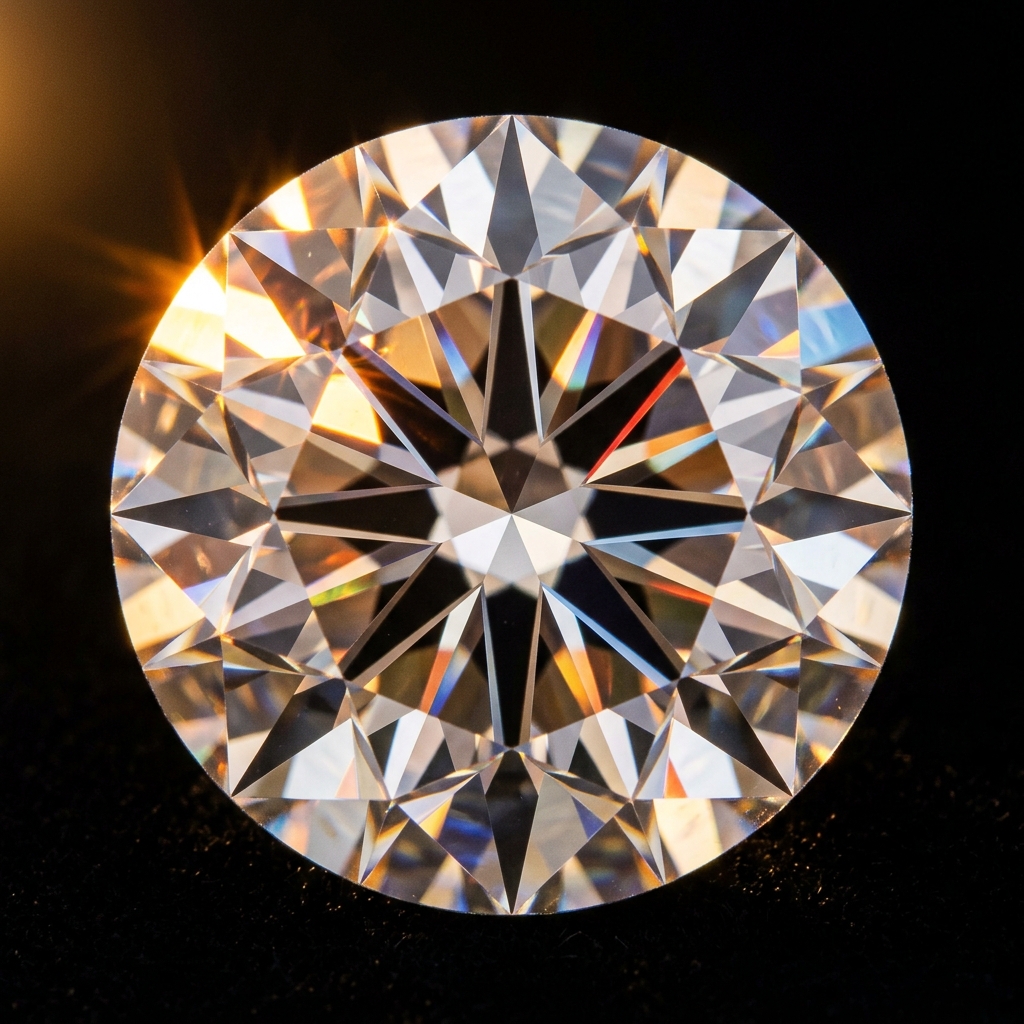
Two diamonds with identical color, clarity, and carat can look 40% different in person. Cut is why.
When looking at the 4Cs, nothing dictates a diamond’s overall beauty and fire more than how it is cut. For the complete high-level overview, refer back to our Pillar Guide to the 4Cs. But today, we are going deep on the one ‘C’ you absolutely cannot afford to compromise on in 2026.
What “Cut” Actually Measures
Your jeweler will tell you that a round diamond is a “round cut.” This is misleading. “Round,” “Oval,” and “Emerald” are shapes. Cut refers to the microscopic geometry of the stone—its proportions, symmetry, depth, table percentage, and polish.
A diamond acts like a complex series of mirrors. When light enters the top (the table), a well-cut diamond bends that light, bounces it off precisely angled facets on the bottom (pavilion), and shoots it right back through the top to your eye. This is what we call light return. If a diamond is cut too shallow, light leaks out the bottom. If it’s cut too deep, light leaks out the sides. Both result in a dull, dark, lifeless center.
The Grading Scale
While color and clarity use alphabetical systems, cut is graded descriptively:
- Ideal / Excellent: The absolute gold standard of light return. The proportions are geometrically optimized to maximize brilliance and fire.
- Very Good: A slight step down. Often cut deeper to preserve carat weight from the rough stone. Noticeable reduction in sparkle to the trained eye.
- Good: Noticeable light leakage. The diamond lacks vibrancy and will appear smaller than its carat weight suggests.
- Fair / Poor: Do not buy these under any circumstances. They resemble glass more than diamonds.
IGI vs GIA: Grading the Graders
The two titans of diamond certification grade cut slightly differently. The GIA maxes out at “Excellent,” while the IGI uses “Ideal” as its pinnacle grade, with “Excellent” sitting just below it.
The trap to avoid: The IGI can occasionally be slightly more lenient in granting “Ideal” statuses than the GIA is with “Excellent.” Especially for lab-grown diamonds (which are predominantly certified by the IGI), a baseline “Ideal” isn’t always enough. You need to verify the specific proportions like table percentage (aim for 54-57%) and depth percentage (aim for 60-62.5% for rounds) on the certificate itself.
Why Cut Matters More Than the Other 3Cs
Cut is the only ‘C’ entirely dictated by human hands, and it controls roughly 80% of a diamond’s visual performance. You can throw thousands of dollars at a D-color, Flawless diamond, but if the cut rating is only “Good”, it will look awful compared to a flawlessly cut G-color, VS2 diamond.
Brilliance (white light flashes) and Fire (rainbow flashes) literally blind the eye to slight color tinting or microscopic inclusions. An Ideal cut does the heavy lifting, actively masking lower grades in other categories. This is the ultimate “cheat code” to maximize your budget.
Not sure which grade to buy?
Take our 60-second quiz and we’ll tell you exactly what to look for.
Ideal vs “Super Ideal”
With lab-grown diamonds, you aren’t fighting Mother Nature for raw material; the rough diamond supply is abundant. This means cutters have less incentive to compromise proportions just to hit a specific carat weight.
Because of this, true “Ideal” cut LGDs are incredibly accessible in 2026. However, some retailers invent proprietary marketing terms like “True Hearts” or “Super Premium.” Unless accompanied by undeniable geometric benchmarks or perfectly contrasted hearts-and-arrows ASET scope photography, you are likely just paying a branded markup for a standard Ideal cut.
The 3 Cut Grade Scams
- The Table Percentage Game: Jewelers will push diamonds with massively wide “tables” (the flat top facet) to make them look bigger across. This ruins the light diffusion, leaving a dead spot in the center of the stone.
- “Premium” Marketing: Because “Premium” technically isn’t a recognized grade on lab certificates, big-box retailers slap it on generic “Very Good” diamonds to upsell you.
- Asymmetric Girdles: A diamond might be given an “Excellent” grade on paper but have a wildly uneven girdle (the thin outward edge), making it a nightmare to confidently set in prongs without risking chipping.
Stop paying for marketing and start paying for light performance. Demand nothing short of IGI Ideal or GIA Excellent, and verify the proportions.
Cut is the first of four levers — the rest are color, clarity, and carat. To see how Cut combines with the others to shape the Skygem Optimal Mix, return to the 4Cs Complete Guide.
Browse Eternity LGD’s flawlessly cut collection →