4/7/2026
Diamond Clarity Explained: VS1 vs SI1 and the Eye-Clean Threshold
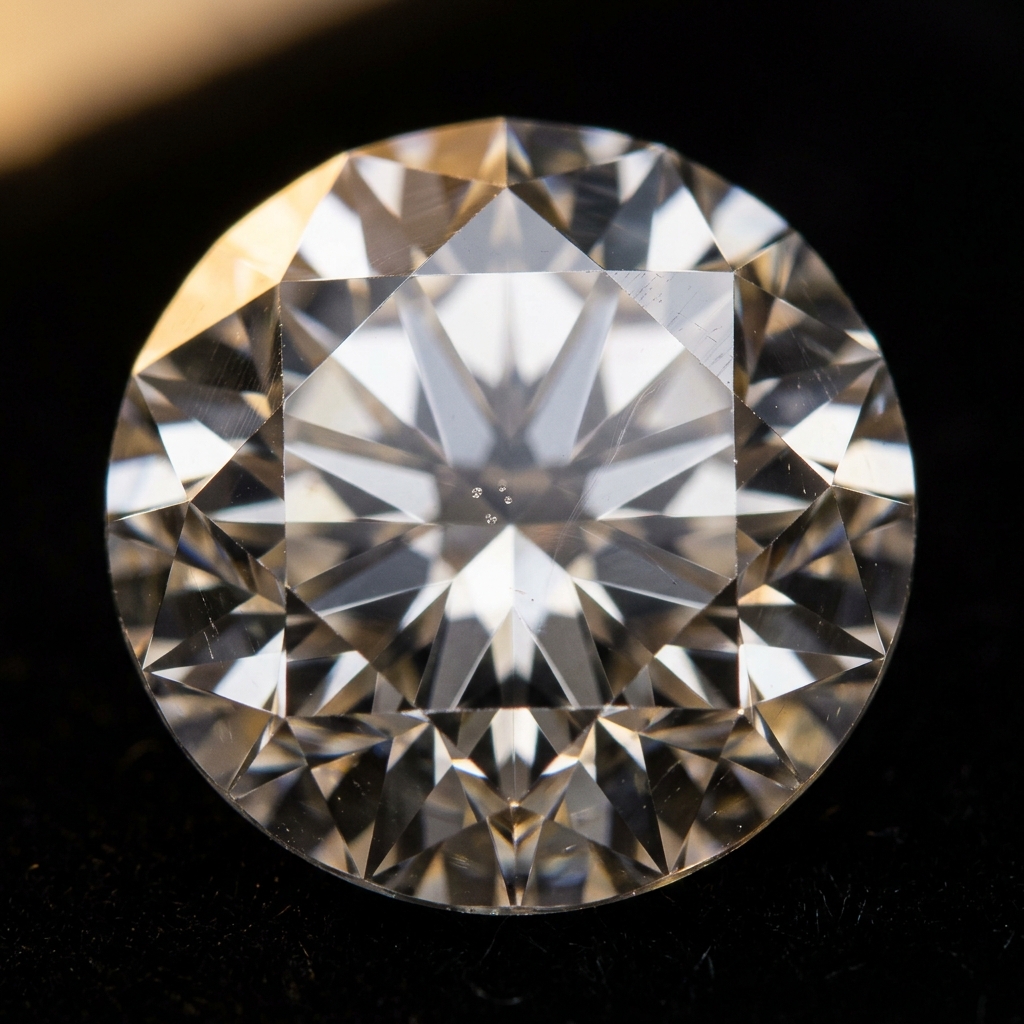
If you can’t see an inclusion at arm’s length, you shouldn’t be paying for its grade.
In our Mastering the 4Cs Guide, we discussed how minimizing wasted budget on invisible improvements is the secret to buying lab-grown diamonds. Nowhere is this more applicable than in the realm of Clarity.
Clarity evaluates the tiny imperfections trapped inside a diamond (inclusions) or on its surface (blemishes). While jewelers love to push “Flawless” stones as the ultimate romantic gesture, purchasing anything above a certain threshold is quite literally paying for a feature only a microscope can appreciate.
The 11-Grade Scale
Both the GIA and IGI grade clarity under 10x magnification, plotting exactly what they find on a map of the diamond. The grades are:
- FL / IF (Flawless / Internally Flawless): Zero inclusions visible at 10x magnification. Extremely rare and extremely expensive.
- VVS1 / VVS2 (Very, Very Slightly Included): Minute inclusions that are incredibly difficult for even a skilled grader to find at 10x magnification.
- VS1 / VS2 (Very Slightly Included): Minor inclusions are observed with effort under 10x magnification.
- SI1 / SI2 (Slightly Included): Inclusions are easily noticed under 10x magnification and may be visible to the naked eye.
- I1 / I2 / I3 (Included): Inclusions are obvious to the naked eye and actively degrade the diamond’s brilliance and durability.
What Inclusions Actually Look Like
Staring at a certificate’s clarity plot can feel like reading hieroglyphics. The map may mark “clouds” (groupings of microscopic pinpoints), “feathers” (tiny internal fractures), or “crystals” (minerals trapped inside).
What jewelers won’t tell you is that a clarity plot doesn’t tell the whole story. A dense, black crystal located dead-center on the diamond’s table will be highly visible. Conversely, a transparent, white feather safely hidden off to the outer edges of the pavilion might be completely invisible face-up, even natively on the same clarity tier.
Need help decoding a certificate?
Get unbiased advice to ensure your diamond is truly eye-clean.
The “Eye-Clean” Threshold
In 2026, the only clarity metric that matters in real life is whether a diamond is eye-clean. If you hold the diamond 12 inches from your face under normal lighting and cannot spot a single defect, it is eye-clean.
- VS1 & VS2: This range is the undeniable sweet spot. 99% of VS-graded lab-grown diamonds are perfectly eye-clean. You get the flawless visual experience without the Flawless price tag.
- SI1 & SI2: This is the danger zone. Some SI1 diamonds are spectacular bargains with deeply hidden white inclusions. Others are visibly flawed with dark spots. Do not buy an SI diamond blind online—you absolutely must review a 360-degree video.
LGD-Specific Clarity Considerations
Lab-grown diamonds are fundamentally identical to mined diamonds, but how they grow introduces unique inclusion profiles you must watch for.
- CVD (Chemical Vapor Deposition): Because they grow layer by layer in a vacuum, CVD diamonds can sometimes suffer from visual “strain” or striations (stria). These parallel growth lines can give the diamond a hazy or blurry appearance. In extreme cases, CVD stones might possess a faint brown or gray tint.
- HPHT (High Pressure High Temperature): These diamonds are grown in a molten metal flux. Occasionally, microscopic flecks of this metal (often iron or nickel) get trapped inside. The trap to avoid: Dark, opaque metallic inclusions in HPHT stones are drastically more visible than traditional white feathers. Refuse outright any HPHT stone with heavy, centered black inclusions, even if the certificate claims SI1.
The I-Grade Trap
Jewelers will present heavily discounted I1 or I2 diamonds by claiming, “It looks great in this lighting!” Do not fall for it.
Even if an I1 diamond somehow looks passable in a heavily curated jewelry store photo, structural integrity is at risk. Severe ‘feather’ inclusions rushing to the girdle can create stress points, significantly increasing the likelihood of the diamond chipping or cracking if bumped against a hard surface.
Don’t buy into microscopic hype, but never compromise on structural integrity. Aim for the VS1-VS2 sweet spot, review visual assets, and buy with confidence.
Clarity is one of four pricing levers — and the one most often weaponized to upsell you into Flawless tier. For the full picture of how the 4Cs interact and where you should actually spend, return to the 4Cs Complete Guide.
Explore Eye-Clean VS1 and VS2 Lab Diamonds at Eternity LGD →