4/7/2026
The 4Cs of Lab-Grown Diamonds: A Complete 2026 Buyer's Guide
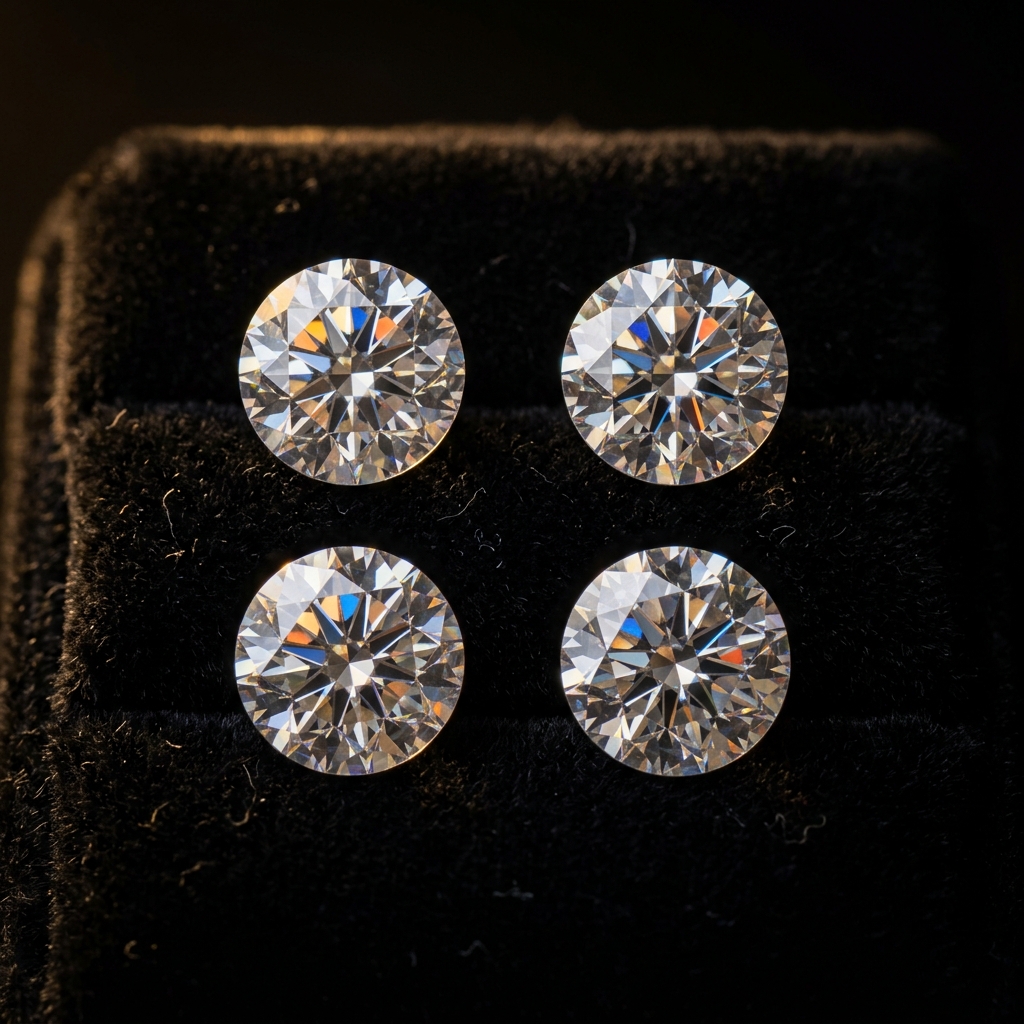
Every diamond on Earth — mined or grown — is graded by the same four letters. Here’s why they matter twice as much for lab-grown stones.
If you’ve started shopping for an engagement ring, you’re likely drowning in an alphabet soup of grades, percentages, and acronyms. Jewelers love this complexity because it distracts you from the markup. In 2026, finding a perfect lab-grown diamond requires a sharp understanding of the 4Cs: Cut, Color, Clarity, and Carat. But more importantly, you need to understand how the rules of the 4Cs change when a diamond is grown in a lab rather than pulled from the earth.
Why the 4Cs Exist
In the mid-20th century, the Gemological Institute of America (GIA) created the 4Cs to establish a universal language for diamond quality. Before this, terms like “river clear” or “water white” were thrown around subjectively to overcharge unsuspecting buyers. The 4Cs brought rigorous, scientific measurement to an otherwise opaque industry, giving consumers a benchmark to compare stones.
Today, nearly every internationally recognized certificate—whether from the GIA or the International Gemological Institute (IGI)—grades diamonds to this exact framework.
How LGDs Change the 4Cs Game
The biggest trap to avoid: Applying mined-diamond scarcity logic to lab-grown diamonds (LGDs).
In the earth, finding a flawless, colorless 3-carat diamond is a statistical miracle. In a laboratory, it’s just Tuesday. The production reality of lab-grown diamonds skews the supply heavily toward higher grades. High-pressure high-temperature (HPHT) and chemical vapor deposition (CVD) techniques have been perfected in recent years to yield stunning visual clarity and color.
What jewelers won’t tell you is that because colorless (D-F) and high clarity (VVS) lab diamonds are relatively abundant, you shouldn’t be paying the astronomical premiums that exist in the mined diamond market. You can prioritize exactly what makes the diamond sparkle without compromising your budget.
Ready to talk to an expert?
Get unbiased advice tailored to your budget and setting.
The Four Cs in 60 Seconds
Cut
Cut doesn’t mean shape (like oval or pear); it dictates how well a diamond returns light. It’s the engine of the diamond’s sparkle. A poor cut means light leaks out the bottom; an excellent cut returns it directly to your eye as brilliant fire. Read the deep dive on Cut Quality Explained.
Color
Diamonds are graded from D (completely colorless) down to Z (light yellow or brown). As the alphabet progresses, the diamond holds more noticeable tint. In lab-grown diamonds, you have unparalleled access to colorless and near-colorless grades affordably. Read the deep dive on Diamond Color Grading.
Clarity
Clarity refers to the natural microscopic traces of the diamond’s growth process—inclusions (internal) and blemishes (external). For LGDs, these inclusions look entirely different depending on whether the stone was grown via CVD or HPHT. Read the deep dive on Diamond Clarity.
Carat
Carat is a measurement of absolute weight, not physical dimensions. A poorly cut 2.0-carat diamond might look smaller face-up than a perfectly cut 1.8-carat diamond. It’s the ultimate illusion of the jewelry industry. Read the deep dive on Carat Weight vs Visual Size.
The Skygem Optimal Mix
What happens when you stop paying for invisible status symbols and start optimizing for face-up beauty? You get The Skygem Optimal Mix.
For the absolute best value in an LGD in 2026, we recommend:
- Cut: Ideal (IGI) / Excellent (GIA) — Never compromise here. Cut dictates 80% of a diamond’s visual impact.
- Color: G or H — This is the ‘near-colorless’ sweet spot that looks icy-white face up, saving you the premium on D-F grades without sacrificing aesthetics.
- Clarity: VS1 or VS2 — These are “eye-clean,” meaning you won’t see inclusions without a jeweler’s loupe, rendering higher grades like VVS technically perfect but visibly identical.
- Carat: Aim just shy of ‘magic numbers’ (like finding a 1.90ct instead of a 2.00ct), though the penalty is far less harsh for LGDs than mined diamonds.
How the 4Cs Interact
The 4Cs don’t exist in a vacuum. A masterfully applied Ideal cut will return so much light that it can successfully mask a lower color grade, making an H or I color stone appear much whiter. Conversely, if you prioritize Carat size but sacrifice on Cut (allowing for deeper proportions to pack on weight), your diamond will look drastically smaller than its weight implies and suffer from dark, lifeless zones. Everything is a tradeoff.
The 4 Grading Traps That Cost Buyers Thousands
- The Cut Trap: Accepting a “Very Good” cut to bump up the Carat weight. A larger dull stone is always worse than a slightly smaller, blindingly bright one.
- The Color Trap: Overpaying for a D-color diamond when setting it in yellow gold or rose gold. The metal will instantly lend a warm hue to the perfect diamond, nullifying your premium upgrade.
- The Clarity Trap: Assuming an SI1 is always an affordable deal. In CVD diamonds, SI1 can mean noticeable grey tinting or heavy strain lines not captured favorably on standard clarity plots.
- The Carat Trap: Buying the absolute deepest cut possible just to hit the “2.0 Carat” mark, resulting in a stone that looks like 1.7 carats when set in a ring.
Not sure which grade to buy?
Take our 60-second quiz and we’ll tell you exactly what to look for.
Stop letting jewelers dictate the compromises you make. It’s time to shop purely for visual performance.
Browse Eternity LGD’s Ready Stock collection →