4/22/2026
IGI vs GIA Certified Lab Diamonds: Which is Better?
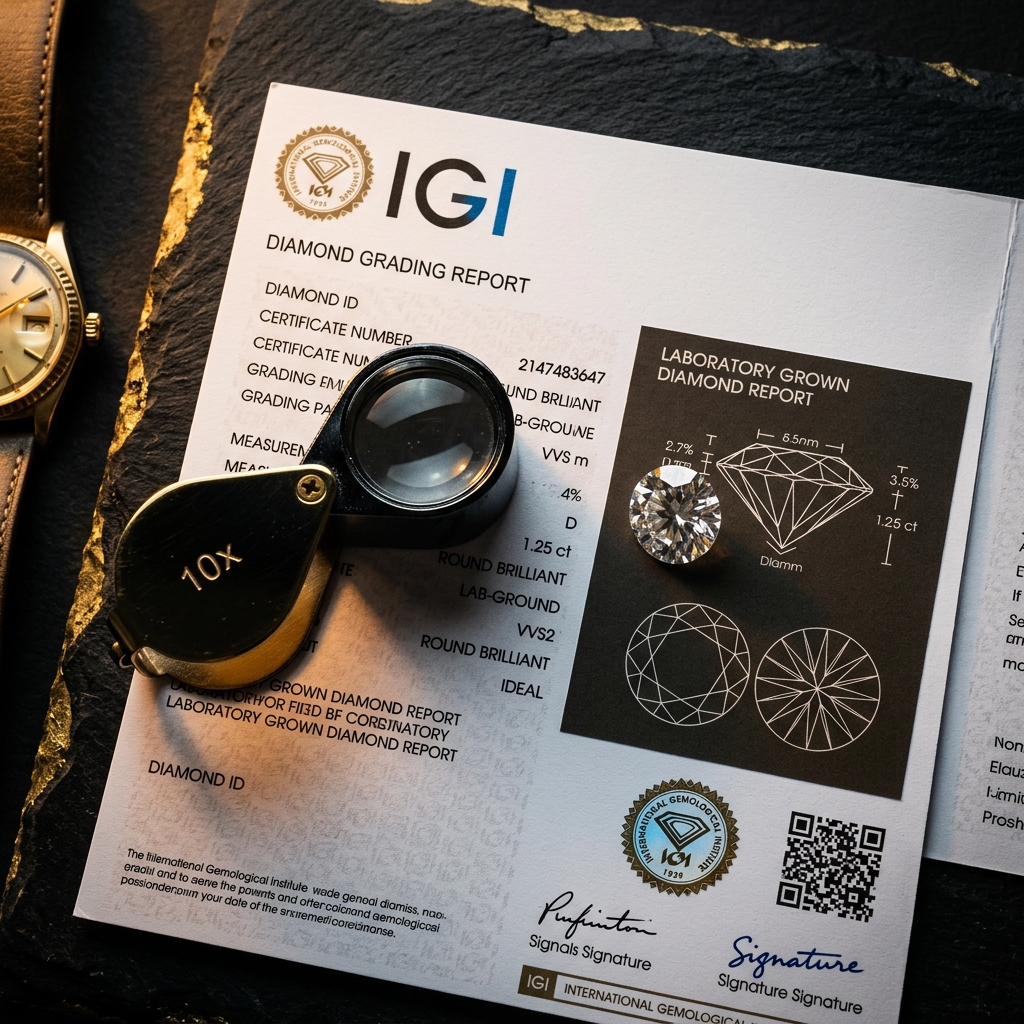
When shopping for an engagement ring, you quickly learn the golden rule: Never buy a diamond without an independent grading report.
For natural diamonds, the GIA (Gemological Institute of America) is the undisputed king. However, if you are looking at lab-grown diamonds, you’ve likely noticed a massive shift: almost all of them are graded by the IGI (International Gemological Institute).
Is the IGI reliable? Does the GIA grade lab diamonds? Let’s clear up the confusion.
Why is IGI Dominating the Lab-Grown Space?
In the early days of lab-grown diamonds, the GIA refused to issue specific grading reports for them. They issued generic “Synthetic Diamond” reports that didn’t provide specific color and clarity grades (e.g., they would just say “Colorless” rather than pointing out D, E, or F).
The IGI seized this opportunity. They began offering full, detailed, standard grading reports for lab-created stones that were identical to the reports used for natural stones. By the time the GIA realized lab-grown diamonds were the future and reversed their policy to offer specific lab-grown grades, the IGI had already captured 90% of the market.
Today, the IGI is widely considered the industry standard for lab-grown Diamond certification.
Are Their Grading Standards the Same?
The GIA is stricter. This is an acknowledged reality in the diamond industry.
If you send the exact same diamond to both laboratories, the IGI is generally known to be a little softer—sometimes by a full color or clarity grade. A diamond that IGI grades as an “F Color / VS1 Clarity” might be graded by the GIA as a “G Color / VS2 Clarity.”
Does this mean IGI is bad? No. It just means their grading curves are slightly different. The IGI is still highly consistent. If you buy an IGI-graded Ideal cut, you are getting an exceptionally brilliant stone.
Which Certificate Should You Buy?
If you are buying a natural diamond, you should absolutely insist on a GIA report. The premium pricing of natural stones demands the strictest possible oversight to ensure you aren’t overpaying.
If you are buying a lab-grown diamond, you should buy an IGI certified stone. Here’s why:
- Market Availability: If you filter your search to only include GIA-certified lab diamonds, you are eliminating over 90% of the available inventory. You will drastically limit your options for finding the perfect cut proportions and dimensions.
- Cost: GIA certificates cost the manufacturers more than IGI certificates. That cost is passed on to you. You will pay a premium for a GIA lab-grown stone, which defeats the purpose of looking for value in the lab-grown market.
- The Naked Eye Test: Because lab diamonds are so incredibly affordable, you can easily afford high-tier grades (like F color, VVS2 clarity). At these high tiers, even if the IGI was off by one minuscule grade, the diamond is still completely flawless and colorless to the naked eye. The strictness of the GIA doesn’t matter if you literally cannot see the difference without a 20x microscope.
The Most Important Factor: The Eyes
A piece of paper doesn’t sparkle—the diamond does. A certificate is only a baseline. There are fatal flaws in lab-grown diamonds (like brown CVD strain or heavy blue tinting) that neither the IGI nor GIA explicitly list on their reports.
This is why you cannot buy a diamond based purely on its paperwork. You need a human expert to evaluate the actual stone.
Want to ensure your IGI certificate matches a truly gorgeous diamond? Let our concierge team verify the light performance for you. Start comparing real market prices using our Diamond Price Calculator and then reach out to us to secure the perfect stone!